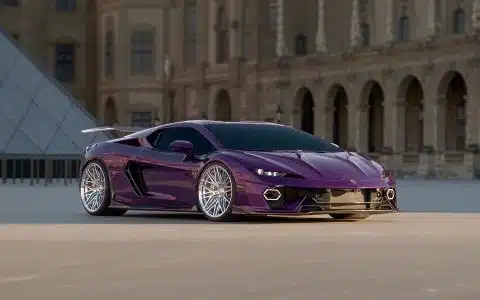
Almost nobody cuts into an Enzo. Around 500 cars left Maranello between October 2002 and May 2004 against an original plan for 399, and the two decades since have taught owners that originality is what the market pays for, which is why a modified Ferrari Enzo barely exists as a category. Behind the driver, the F140B is part of that logic. It was the first of the F140 family that would go on to power the 599, the F12 and the 812, and most Enzo owners treat it as something to preserve rather than open up.
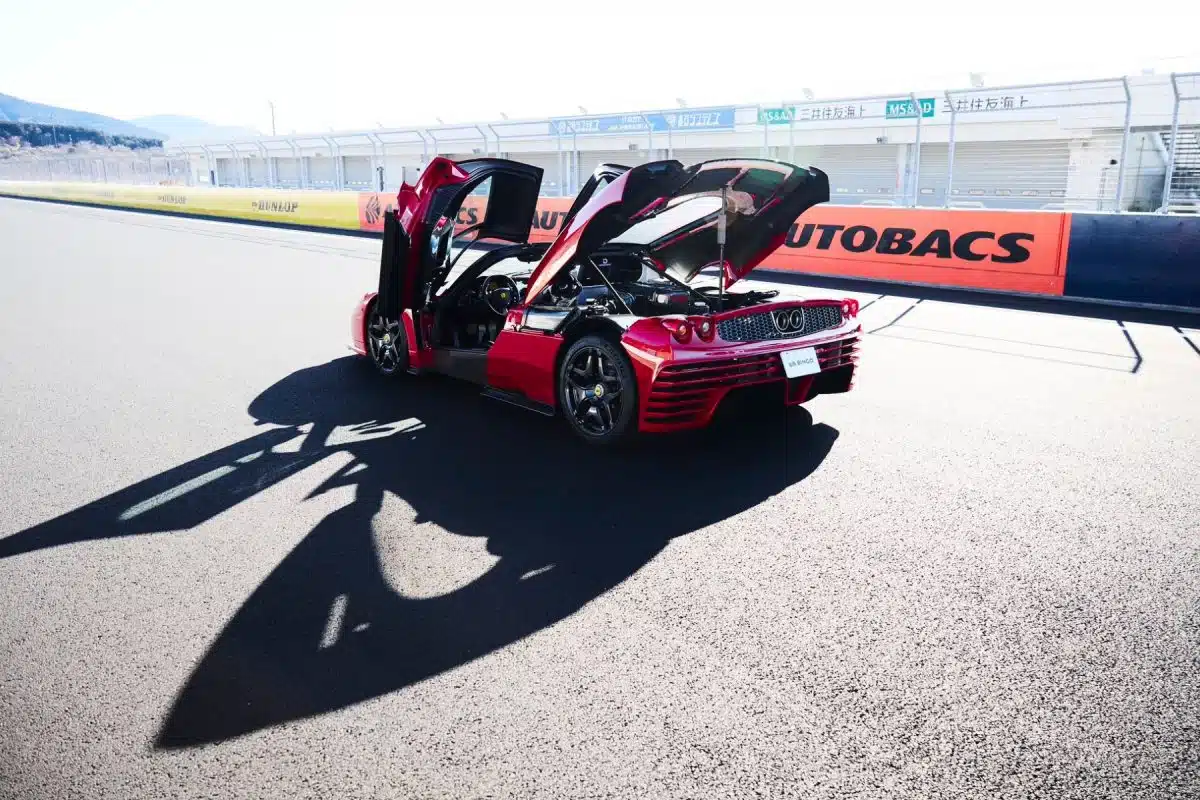
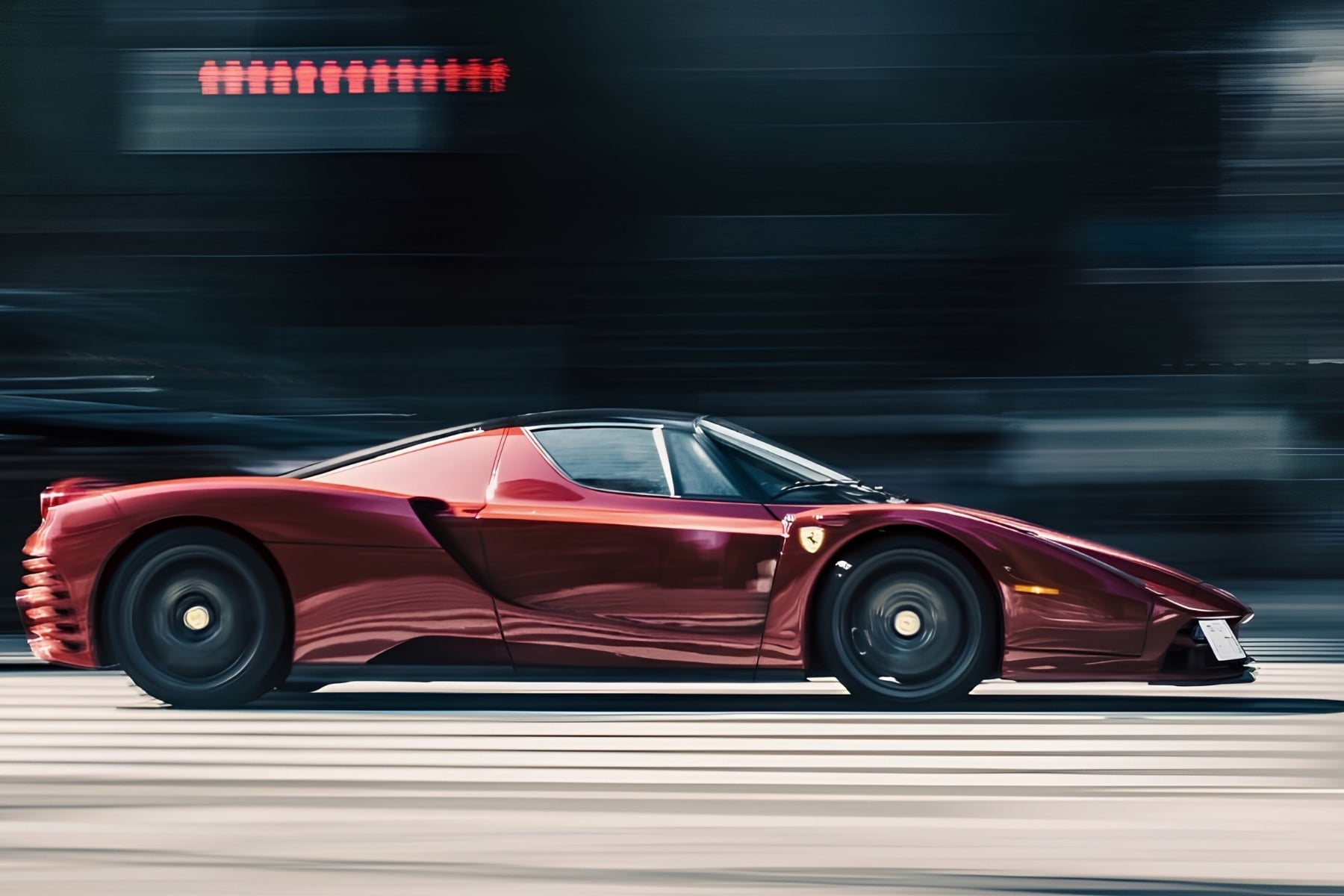
IDINGPOWER opened it. The Yokohama shop spent eight years on the engine alone before finishing the car it calls the F-07, and what came out is a modified Ferrari Enzo running 6,298cc, fixed intake trumpets, an exhaust that exits through the center of the rear grille, and no side mirrors at all. Body panels, wheels and suspension were all redone in house. Calling it a tuning package undersells how much of the car was taken apart and reconsidered.
Shinkatsu Ide did not come up through Ferrari. He started on motorcycles and Toyotas, then trained at Schnitzer Motorsport in Germany, which is where he learned to build BMW racing engines. He came back to Japan and made his name on naturally aspirated BMW stroker motors, the kind of work that rewards patience with a crankshaft and a flow bench rather than boost. In the early 1990s his shop became the only McLaren service center in Japan, which meant the F1 came through his door for maintenance.

That history explains a lot about how IDINGPOWER approaches a car. The shop is small and sits in a residential part of Yokohama, and it handles road and race builds with design and fabrication done on site rather than farmed out. Bodywork, wheels and suspension are all developed internally, which is unusual for a shop of that size and is the reason this modified Ferrari Enzo holds together visually instead of looking like a catalog of parts bolted to a donor car.
The engine work started in 1990 with a Testarossa. IDINGPOWER took the flat-12 F113 from 5.0 to 5.4 liters, and the list kept growing from there: the 328 from 3.2 to 3.5, the 348 from 3.4 to 3.7, and the F355 in both 3.6 and 3.8-liter forms that became the shop’s first complete cars, the F365 and F385. A 360 Modena went from 3.6 to 3.8 liters as the 380GT. Each of those was an internal engine job, not a remap and an exhaust.
The F460GT is the one most people outside Japan have seen. Built on the F430, it took the 4.3-liter V8 out to 4.6 liters for a quoted 508 horsepower, wrapped it in a twelve-piece aero kit and forged magnesium wheels, and sold as a serialized conversion at 16,200,000 yen when it surfaced in 2009. It also carried the first version of the camera mirror system that reappears on the F-07. Thirty-plus years of boring and stroking Ferrari engines is the context the F-07 needs, because without it this modified Ferrari Enzo looks like a styling exercise rather than the end of a long technical line.

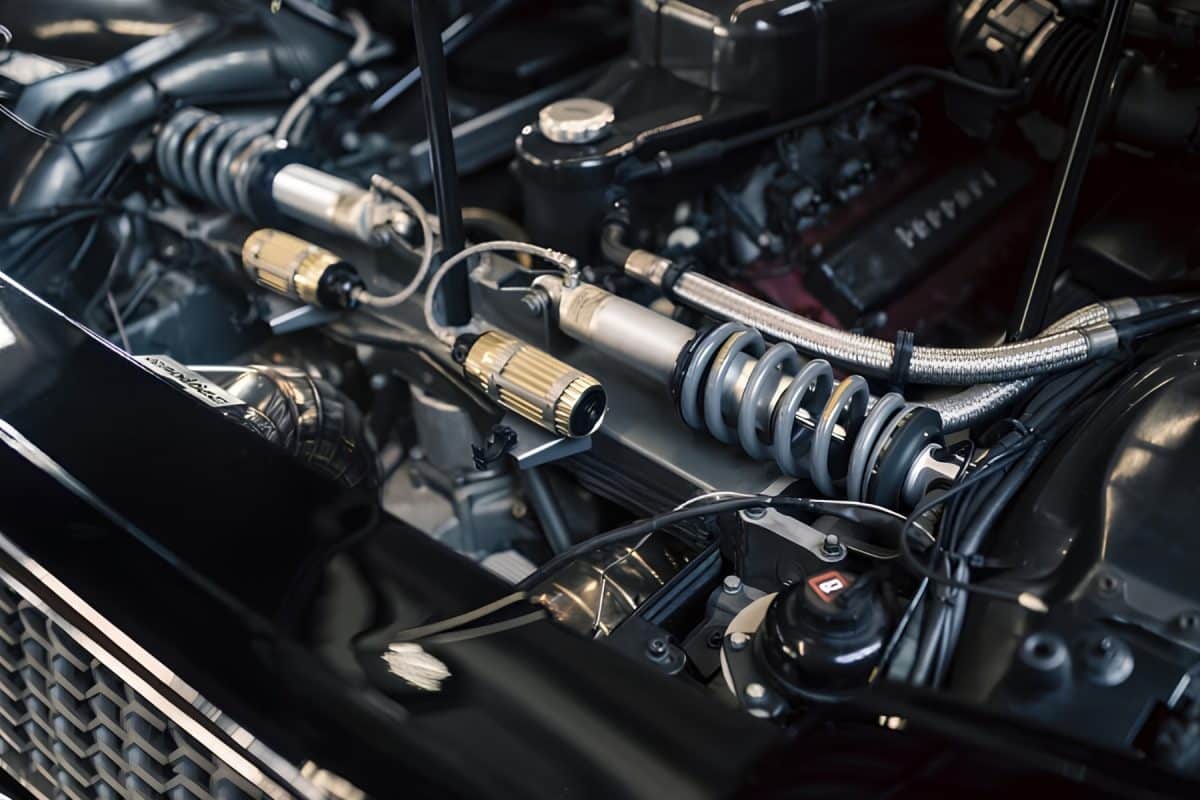
Factory specification for the F140B is 92.0mm of bore and 75.2mm of stroke for 5,999cc, good for 660 PS at 7,800 rpm and 657 Nm at 5,500 rpm. IDINGPOWER credits the extra 300cc to a special crankshaft developed over years of testing, which means stroke rather than bore. On an unchanged 92mm bore that works out to somewhere around 79mm of stroke, and it is the opposite of the route Ferrari took later with the same architecture, when the F140 EB reached 6,262cc by opening the bore to 94mm and leaving the stroke alone. Longer stroke buys torque and costs piston speed, so the rest of the build has to account for it.
That is where the balancing and lightening work comes in. Pistons, connecting rods and intake valves were all lightened and balanced, compression went up to 11.5:1, and the oil and water passages were cleaned up by hand. Valve timing was set individually rather than to a single published spec. Quoted output for this modified Ferrari Enzo is 708 PS (520 kW) at 8,000 rpm and 666 Nm at 5,400 rpm, with peak power arriving 200 rpm higher than stock and peak torque 100 rpm lower.
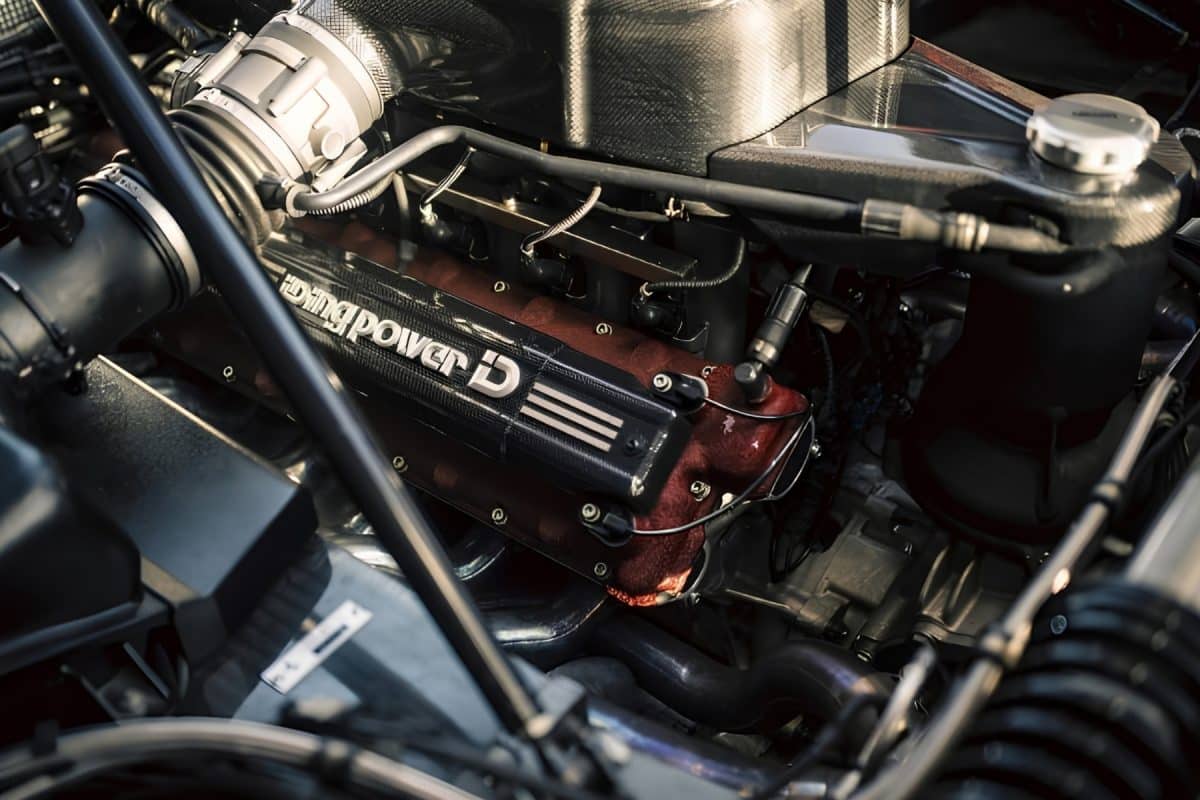
Set against Ferrari’s own 660 PS, that is a gain of roughly 48 PS for 300cc and eight years of development, and the torque figure moves by 9 Nm. Anyone shopping on peak numbers will find that underwhelming, and IDINGPOWER says so directly, describing the goal as throttle response and a flatter delivery rather than a bigger headline figure. It is worth noting that the shop’s own materials quote a larger horsepower gain than a comparison against Ferrari’s published 660 PS supports, which suggests they are measuring against a different baseline. The 9 Nm torque delta lines up exactly with the factory number, so the torque side is straightforward.
The most interesting decision on this modified Ferrari Enzo is one that removes a factory feature. The Enzo runs a variable-length induction system that extends the intake runners from 340mm to 430mm with hydraulic actuators, a way of having short-runner top-end power and long-runner mid-range in the same engine. IDINGPOWER deleted the mechanism and fixed the trumpets at one length. Doing that gives up the factory’s ability to optimize for two different parts of the rev range.
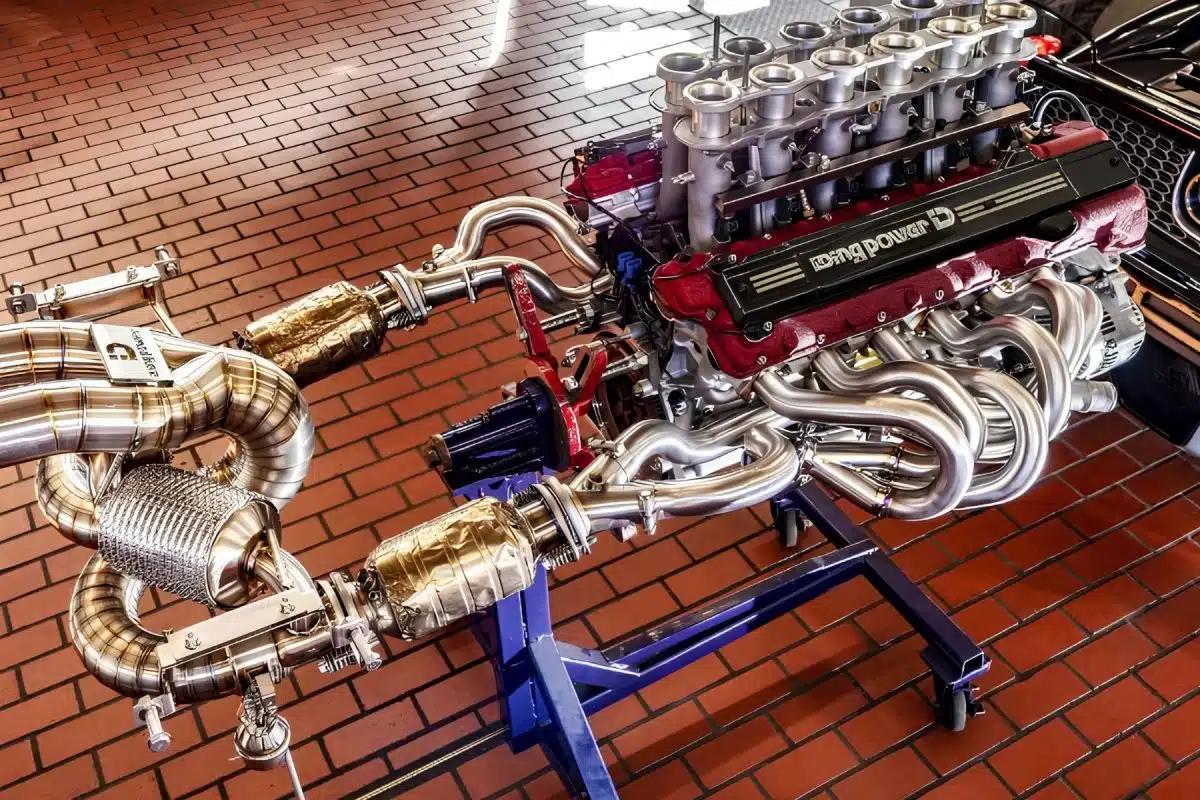
What it buys is a cleaner intake path, one less hydraulic system to fail on a twenty-year-old car, and a tract that can be matched precisely to the new exhaust rather than compromised across two positions. The shop claims the fixed setup extends the torque curve rather than narrowing it, which is plausible if the chosen length sits where the stroked engine actually wants it, though it is the kind of claim that depends entirely on where the car spends its time. On a car being driven to 8,000 rpm it is a defensible trade. On an Enzo used for weekend road miles it is the change most likely to be felt as a loss.
To match it, the exhaust was rebuilt around a metal catalytic converter and a layout that routes the muffler exit to the center of the rear grille. That last part is packaging driving styling rather than the reverse. Getting the exhaust to exit centrally is what made the rear grille treatment possible, and the grille is the thing people remember about this car.
The rear of the F-07 combines a finned bumper, an enlarged grille, the diffuser and the exhaust exit into one assembly. Its pattern is based on yabane, the traditional Japanese arrow-feather motif, and from ten feet away it passes for ordinary honeycomb. Up close the lattice has depth and internal structure that a stamped or molded mesh cannot produce, which is why IDINGPOWER built it with DMLS, a direct metal laser sintering process that grows the part layer by layer out of metal powder. Choosing additive manufacturing for a visible exterior panel is an expensive answer to a styling problem, and it is the single detail on this modified Ferrari Enzo that cannot be copied by a shop with a mold and a press.

Behind that rear treatment sits a cooling rationale that holds up. A mid-mounted V12 with catalysts and a stroked bottom end dumps a lot of heat into a closed engine bay, and the F-07 adds finned outlets on the engine cover, enlarges the outlets behind the rear wheel arches, and vents the rear bumper to keep air moving out of that space. Heat that does not leave the bay ends up in the intake charge and the oil, which is a slower and less dramatic failure than a blown head gasket but a real one on a car making 708 PS.
At the front, the hood was reshaped to sharpen the Formula 1 style nose the Enzo already had, and the grille picked up wing-profile fins. Air outlets were added on top of the fenders and integrated into the headlight units to let wheel-well pressure escape. That is the same reasoning used on GT cars, and on a car with the Enzo’s frontal area it matters more than the styling benefit.
Wheel numbers are the cleanest engineering win on this modified Ferrari Enzo. A stock Enzo runs center-lock 19-inch cast magnesium wheels, nine inches wide up front and thirteen at the rear, at a quoted 12.20 kg front and 14.60 kg rear. The F-07 goes up to 20 inches in forged magnesium and comes in at 11.20 kg front and 12.88 kg rear. Gaining an inch of diameter while dropping a kilogram at the front and nearly two at the rear is real unsprung and rotating mass removed, and the five-spoke design traces back to the F365-S3 that IDINGPOWER showed in 1995.

Suspension was retuned around that. Shocks are revalved from the Enzo’s settings and the springs were specified to suit the lighter wheels, with the stated aim of a more compliant ride rather than a stiffer one. That is a defensible direction on a car that already has a carbon tub and 380mm carbon ceramic brakes doing the structural and stopping work.
The mirrors are the part owners will argue about. IDINGPOWER deleted them entirely and fitted EMS, a camera system with displays set into either side of the instrument binnacle, carried over and refined from the F460GT that debuted in 2007. Aerodynamically and visually the case is obvious on a car shaped like this one. Living with it is another matter, because camera mirrors remain a regulatory gray area in much of North America, and a screen failure on a car with no glass fallback is a different problem than a cracked mirror.
IDINGPOWER quotes 3.45 seconds to 100 km/h for this modified Ferrari Enzo, which is a strange figure to lead with given that road tests of stock Enzos have recorded low three-second runs. Acceleration is not where this car makes its case, and treating it as the headline misreads what eight years of crank and cylinder-head work were for. What changed is response off idle and part throttle, the shape of the torque curve, and the last 200 rpm before the limiter.
For a builder, the useful lesson here is the sequencing. Engine work set the intake requirement, the intake requirement set the exhaust layout, the exhaust layout set the rear grille, and the grille became the car’s identity. Most complete-car projects run that chain backwards, starting with a body kit and finding power afterward. That the F-07 reads as one object rather than a pile of upgrades is a consequence of the order the work happened in.
No one should hold this modified Ferrari Enzo up as a template for a normal build. Stroking an F140B is not a service anyone else offers, and the payback on eight years of development measured in peak horsepower is poor by any conventional standard. What it demonstrates is a philosophy that runs through the Japanese tuning houses generally, where the goal is a car that works as a coherent whole and the spec sheet is allowed to come second.
Bulletproof Automotive has spent twenty-five years importing the Japanese tuning work that thinking like IDINGPOWER’s produces, from VARIS and Voltex aero to Powerhouse Amuse exhaust and Volk Racing and Advan wheels. If you are building a track car, a street build that has to survive real traffic, or a show car that needs to hold up to a walkaround, the catalog at Bulletproof Automotive is stocked with parts from the shops that approach a build the same way.