
The GR Supra ARD aero package is what happens when motorsport engineering drives every design decision on a road-going chassis. Aero over aesthetic. Function over form. Purpose over compromise.

ADRO Racing Division built the A90 Supra system around a single goal, which is generating real, repeatable aerodynamic load that holds together at race pace.
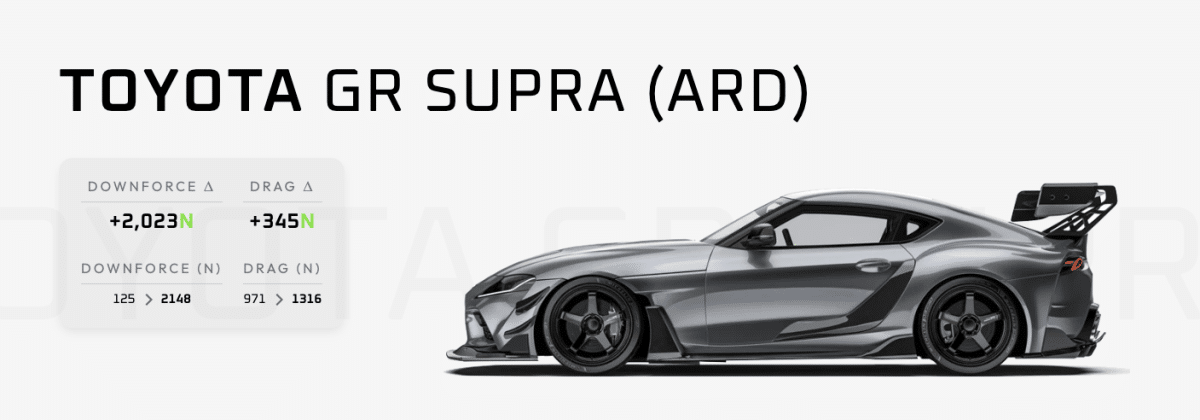
With the ADRO bumper configuration, the full GR Supra ARD aero kit produces 2,148N (483 lbs) of downforce at 180 km/h, roughly 112 mph. That is a 1,618% gain over the stock A90’s 125N, a net add of 2,023N (455 lbs), and it arrives with a 45/55 front-to-rear balance. Drag rises from 971N to 1,316N, an increase of only 345N for the entire system. The GR Supra ARD aero package adds roughly 5.86 units of downforce for every one unit of drag it costs.
ARD is ADRO Racing Division, the company’s motorsport engineering program. Every GR Supra ARD aero component is developed through CFD simulation and validated on track before anything reaches a customer. Scott, ADRO’s Head of Aerodynamics, brings an F1 development background to every project, and that shows up in how the parts interact rather than how they look from a single angle. Components are not designed as separate purchases. They are designed as nodes in a single airflow path that begins at the splitter and ends behind the diffuser. The G87 BMW M2 ARD package was the first complete system out of the program. The GR Supra is the second.
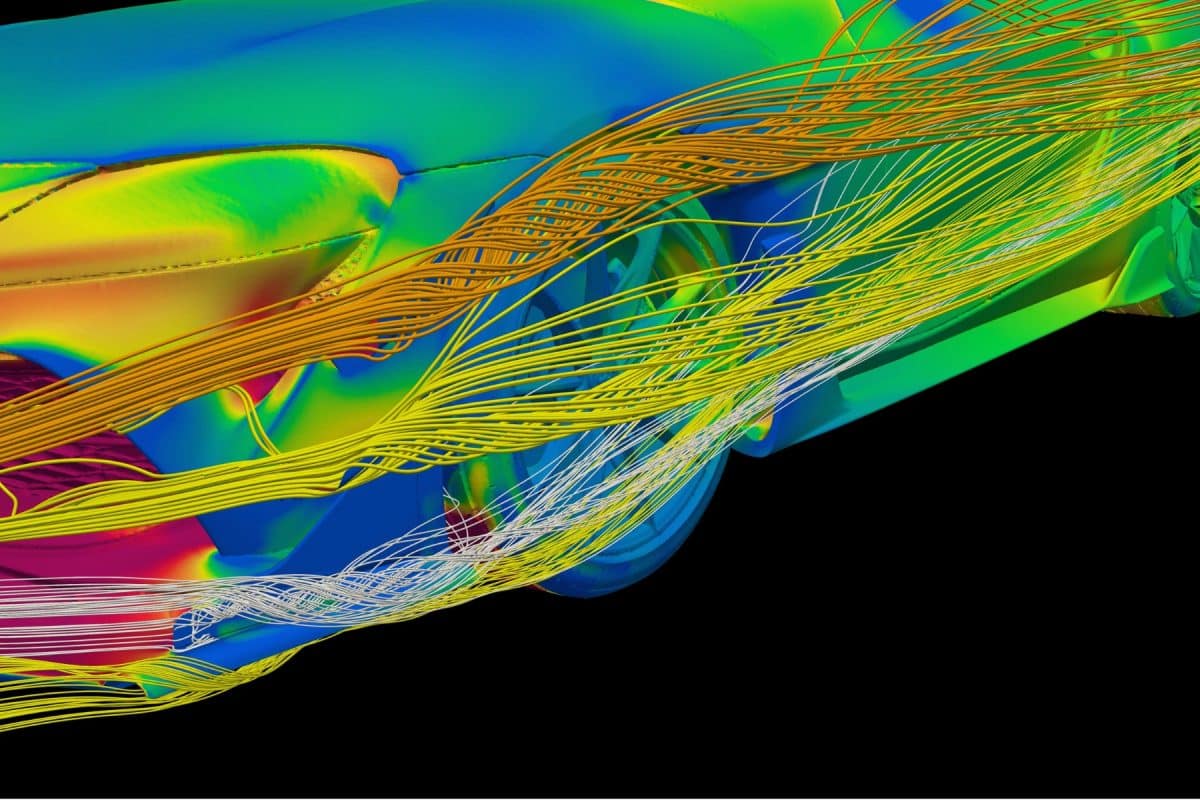
Most front splitters are flat panels. They add visual aggression, generate a modest amount of front downforce, and leave the rest of the car to figure out what to do with the air behind them. The ADRO ARD Prepreg Race Splitter is built on a different premise, which is that the front of the car is the starting point of the complete GR Supra ARD aero strategy that has to be managed all the way to the rear diffuser.
Upper vanes condition the airflow over the outer splitter surface and power the vortices that travel under the endplate tunnels. Lower strakes control outwash across the splitter, prevent spillage off the sides, and protect the effective working area of the panel. F1-inspired endplates initiate strategic vortex generation down the car’s flanks, working in coordination with the V2 side skirts to extract more air and drive more flow under the front end.
The raised central section is the connective tissue of the front aero. It feeds the six mid-floor undervanes and delivers clean, conditioned flow to the rear diffuser. It also reduces pitch sensitivity, which keeps the car’s aero behavior predictable during braking, acceleration, and elevation changes on track. The ADRO bumper splitter carries SKU R18A20-1211. The stock bumper variant is R18A20-1201, paired with the slightly lower stock-bumper GR Supra ARD aero total of 2,041N (459 lbs), a 1,532% gain over stock.
Canards are one of the most recognizable elements in motorsport aero, and one of the most misused on aftermarket kits. On most bolt-ons, they are aesthetic additions that generate marginal front downforce and little else. The ADRO ARD Prepreg Canards are developed to do something more specific, which is to manage the vortices initiated by the front splitter assembly and direct airflow around the front wheels.

Each GR Supra ARD aero canard generates a vortex off its outer edge. Positioned in a quad configuration, those vortices are stacked and sequenced to build in strength as they travel rearward, creating a curtain of managed airflow between the front splitter endplates and the front wheel arches. That curtain matters because rotating wheels are one of the largest sources of drag and turbulence on a road car. They throw air outward and upward, and that turbulence wants to spill inboard into the underbody. The quad canards contain it, which keeps the underbody flow cleaner and the GR Supra ARD aero undervanes downstream working at higher efficiency.
The canards are offered in two SKUs to match bumper configuration. R18A20-1611 fits the ADRO facelift front bumper. R18A20-1601 fits the factory A90 bumper. Both are built from prepreg carbon fiber.
The component most aero kits ignore is also the one that separates a complete system from a visual modification. The ADRO ARD Prepreg Underbody Vanes sit beneath the Supra’s chassis as a set of six strategically placed blades. They generate large-scale vortices that increase suction on the lower surface and pull the car toward the track with measurable, data-logger-confirmed force. At the same time, they direct flow outboard, preventing stagnation under the center section and maintaining high velocity through to the rear diffuser.
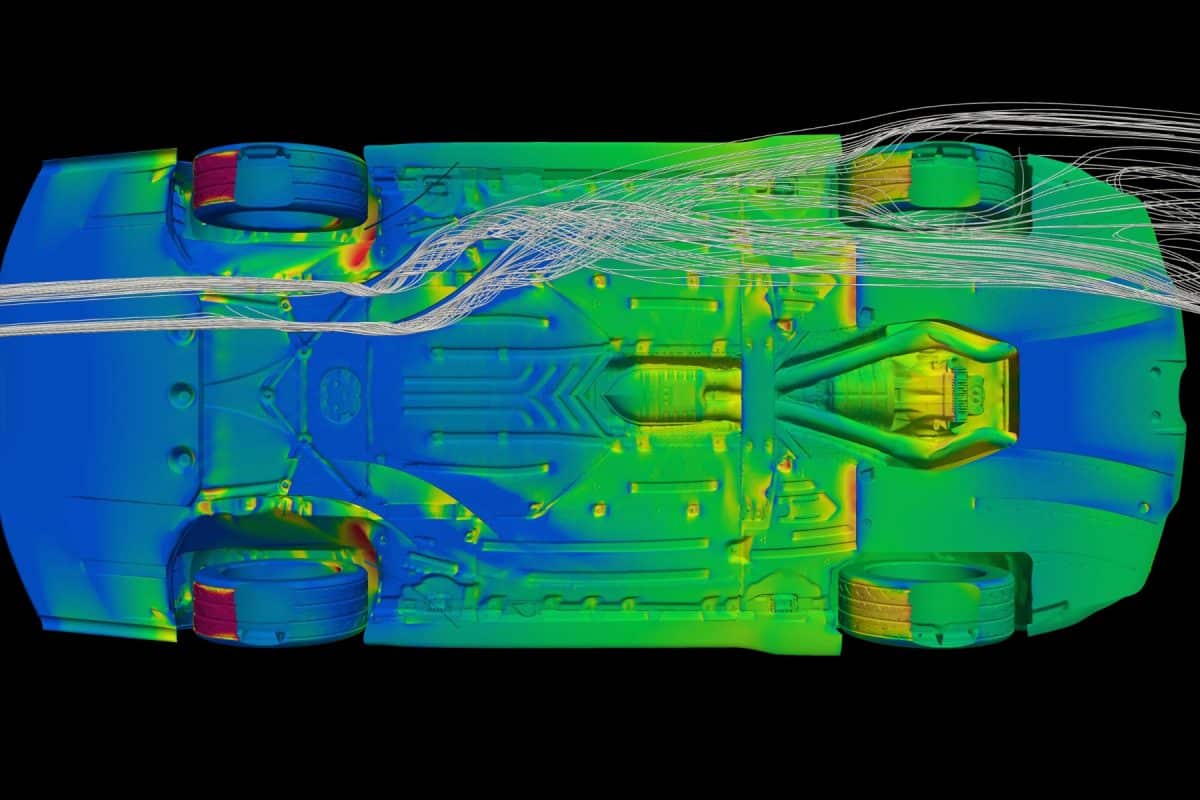
The result is significant front and mid-section downforce gains without adding drag-inducing topside elements. The undervanes also operate in a brutal environment, exposed to road-surface turbulence, brake heat, and sustained aero loading for an entire session. Prepreg construction handles that environment without fatiguing and holds the vane geometry precisely, which matters because a vane that deflects under load generates a different vortex than the one it was designed to produce.
A diffuser works by taking the high-velocity, low-pressure air traveling under the car and gradually expanding it back to ambient pressure before it exits at the rear. Done correctly, that expansion accelerates the flow ahead of it and increases suction across the full underbody. Done with gaps or turbulent inputs, the pressure recovery breaks down and the part produces a fraction of what it should.
The ADRO ARD Prepreg Race Diffuser, SKU R18A20-1301, is designed as the endpoint of the GR Supra ARD aero underbody system rather than a standalone component bolted to the rear bumper. The integrated undertray seals the gaps that allow turbulent recirculation under a stock Supra. On the factory car, high-pressure air bleeds into the underbody from the sides and center, disrupting the low-pressure environment the diffuser depends on. Blocking those gaps keeps underbody velocity high across the entire floor.

Internal strakes generate vortices that roll along the diffuser surface, energizing the boundary layer and preventing flow separation as the channel expands. Those strakes are only that effective because of what arrives at the diffuser inlet. The ARD undervanes feed the diffuser conditioned, high-velocity flow with the energy needed to drive the expansion process. The two parts are designed as a system, not as separate purchases. This part is compatible with the existing ADRO Carbon Rear Diffuser (A18A20-1302) for owners already running that piece.
The rear wing closes the loop on the GR Supra ARD aero system. The ADRO AT-P1 Reverse Swan Neck Wing, SKU A18A20-1504, is built from prepreg carbon fiber with aluminum reverse-mount uprights. Reverse swan neck geometry preserves the high-pressure side of the airfoil, allowing the wing to work without the disturbance a conventional mount creates underneath the working surface. The airfoil is designed for clean attached flow across a wide angle-of-attack window, which keeps the wing predictable across changes in pitch, ride height, and corner load.
Owners already running the AT-R2 swan neck wing can swap to the AT-P1 with no additional drilling and no bracket changes. The AT-P1 mounts in the exact same location as the AT-R2, which means the reinforcement bracket installed for the previous wing carries over directly.
Baseline A90 GR Supra: 125N downforce, 971N drag at 180 km/h. Full GR Supra ARD aero package with ADRO bumper configuration: 2,148N (483 lbs) downforce, 1,316N drag, a net downforce gain of 2,023N (455 lbs), a 1,618% increase over stock, with a 45/55 front-to-rear balance. Full GR Supra ARD aero package with stock bumper configuration: 2,041N (459 lbs) downforce, a net gain of 1,916N (431 lbs), a 1,532% increase over stock, with the same 45/55 balance.
Construction across all GR Supra ARD aero components is prepreg carbon fiber, with the AT-P1 wing adding aluminum uprights. Component SKUs are R18A20-1211 (race splitter, ADRO bumper), R18A20-1201 (race splitter, stock bumper), R18A20-1611 (canards, ADRO bumper), R18A20-1601 (canards, stock bumper), R18A20-1301 (race diffuser), and A18A20-1504 (AT-P1 reverse swan neck wing).

Every GR Supra ARD aero component is produced in prepreg carbon fiber. Prepreg uses resin pre-impregnated into the fiber under controlled temperature and pressure conditions, which means resin distribution is precise and consistent throughout the part. The result is a lighter, stiffer component with no soft spots or resin-rich areas that can delaminate under sustained load. The cure process is autoclave-grade rather than hand-laid wet, which is why prepreg is the standard construction method in Formula 1, World Endurance, and other top-tier motorsport disciplines.
For track use, that matters beyond aesthetics. A splitter that flexes under load does not produce the downforce it was designed to. A canard that flexes changes its angle of attack, which changes the vortex it produces, which degrades the airflow management it was designed to deliver. A diffuser channel that flexes alters the pressure gradient the strakes are working against. Prepreg eliminates those variables. What the CFD predicted is what the part delivers on lap one and lap 20, in heat and under sustained aero loads.
The GR Supra ARD aero package is what aero looks like when motorsport drives the design instead of trim levels. CFD development, prepreg construction, and on-track validation are not marketing language for ARD. They are the conditions under which each part is allowed to ship.
For A90 and A91 owners building a Supra for serious track use, Bulletproof Automotive carries the full ADRO Racing Division lineup with direct support on fitment, bumper configuration, and full-kit ordering. Contact our team for GR Supra ARD aero availability and configuration guidance.